



If you’re a contractor, subcontractor or supplier in Ontario and you haven’t been paid, a construction lien is one of the strongest tools you have. It ties your claim to the property itself, which gives you real leverage. But lien rights are also unforgiving. Miss a deadline by a single day and the right is gone. Here’s what you need to know.
What a construction lien actually is
Under Ontario’s Construction Act, anyone who supplies services or materials to improve a property can claim a lien for the unpaid value of that work. On private projects, the lien is registered on title to the land. On most public projects, where land can’t be liened, you instead give written notice of your claim to the owner, which attaches to the holdback the owner must keep.
The lien doesn’t automatically put money in your pocket. It’s security. It means the owner can’t easily sell or refinance until the claim is dealt with, which tends to bring people to the table quickly.
The two deadlines that matter most
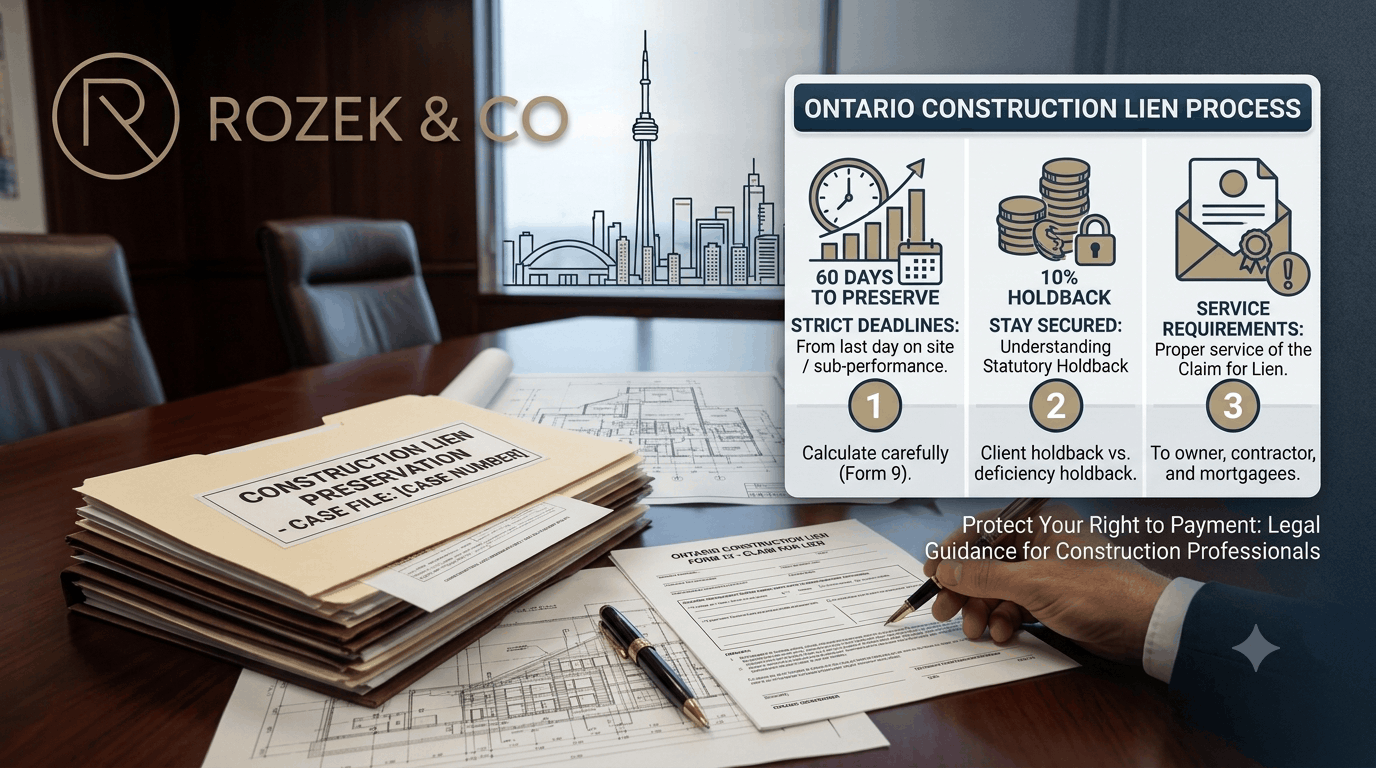
There are two steps, and each has its own clock. First, you have to preserve the lien. For most contracts, you have 60 days to do this, usually counted from when the project is certified as substantially performed, or from when the work was completed, abandoned or terminated. For subcontractors, the date you last supplied services or materials can also start the clock.
Second, you have to perfect the lien. That generally means starting a court action and registering a certificate of action on title within 90 days after the last day the lien could have been preserved. If you preserve but don’t perfect in time, the lien expires.
Counting these days correctly is where many claims go wrong. The trigger date isn’t always obvious, and it can differ between the contractor and the subcontractors on the same project.
What changed with holdbacks in 2026
Owners in Ontario must keep back 10% of the value of work as a holdback. Since January 1, 2026, the rules on releasing that holdback changed. Annual release is now mandatory on longer projects, with owners required to publish a notice after each contract anniversary and pay the holdback within a set window, unless a lien is in place. Lien rights also no longer expire on an annual basis. If you work on multi-year projects, it’s worth reviewing how these rules apply to your contracts.
Common mistakes to avoid
The most common mistake is simply missing the deadline while trying to negotiate. It’s fine to keep talking, but preserve the lien while you do. Another is claiming more than you’re owed. Inflating a lien to gain leverage can expose you to liability for damages, so your claim should match the value of the work actually supplied.
Finally, some contractors forget that a lien isn’t the only option. Adjudication under the Construction Act can resolve payment disputes quickly, and you may also have a breach of trust claim if funds meant for the project were diverted.
Getting help early
Because the timelines are so tight, it’s best to speak with a lawyer as soon as payment stalls. Our article on common construction disputes in Toronto covers the bigger picture, and contractors negotiating a settlement should also read about preserving warranty rights while settling.
Our Toronto construction lawyers and wider construction law team can calculate your deadlines, prepare the claim and register it correctly.
Get help with a construction lien.
This article is general information, not legal advice. Deadlines depend on your contract date and the facts of your project.
